InsightsCrypto Casinos5 min read
On This Day: Primedice Closed After 12 Years, Leaving Its Legacy in Stake
A year ago today, Primedice stopped taking bets after 12 years. From its founders beginnings in RuneScape staking to a 200 BTC payout on launch day, the Bitcoin dice site laid the groundwork for Stake’s launch in 2017 and its global rise.
 Written by blinded8 October 2026


On Oct 8, 2025, Primedice stopped taking bets, bringing more than 12 years of play on the standalone Bitcoin dice site to an end. Its closure notice directed players to withdraw their funds and continue at Stake, the casino that grew out of the same team’s early work.
Before the streamers, Drake and major sports sponsorships, there was a single dice game and a BitcoinTalk thread. Primedice gave Ed Craven and Bijan Tehrani an early audience, a public record of handling players money and the operating experience they would carry into Stake.
The shutdown left the original site behind, but its game and name had already found a new home as a Stake Original.
From RuneScape staking to Bitcoin dice
Craven and Tehrani met as teenagers on RuneScape, where they became involved in staking: wagering in-game gold on duels. They later moved into Bitcoin gambling with Primedice in 2013. Their early history also includes co-founder Chris Freeman, who was involved in Primedice but did not become part of Stake’s founding duo.
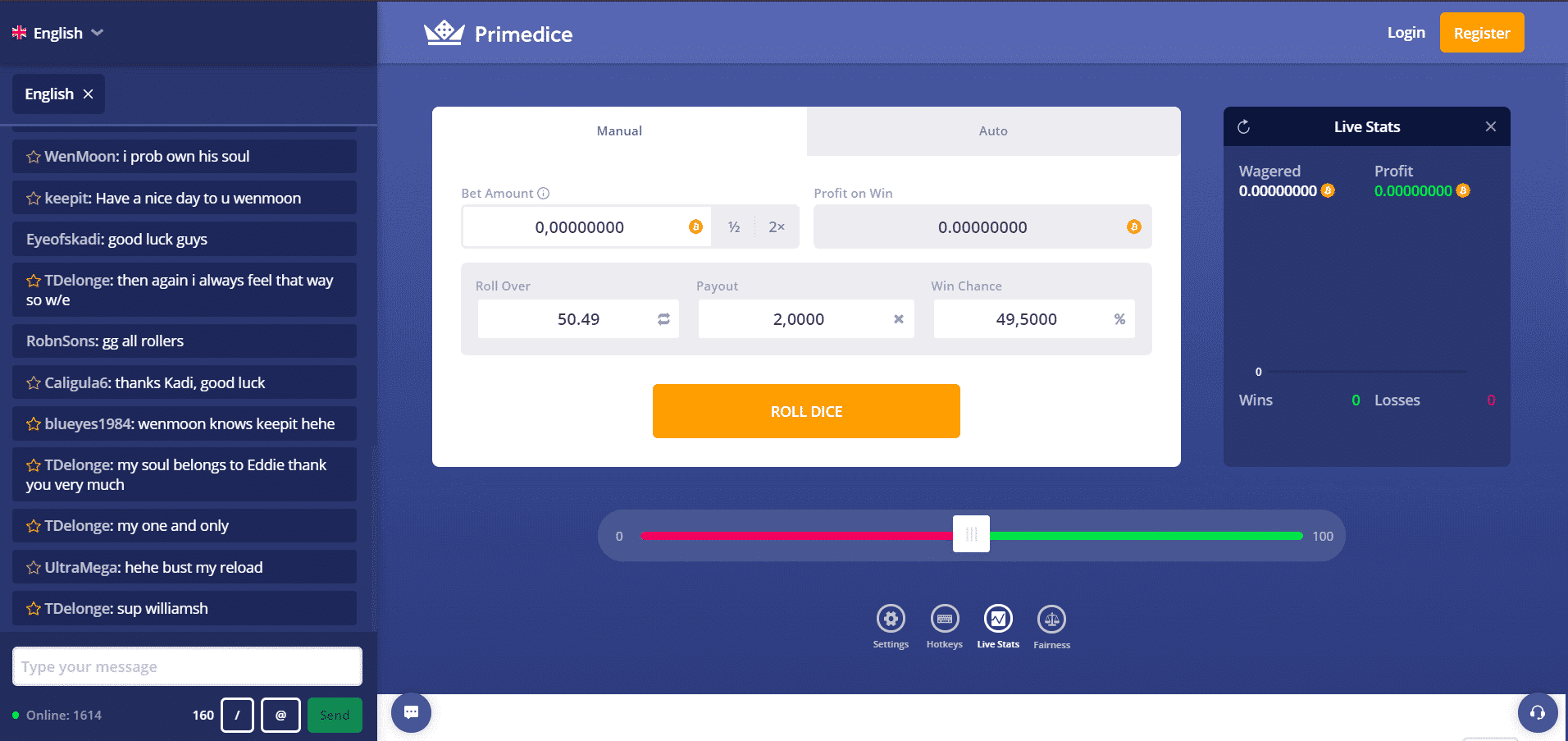
Primedice kept the product narrow. Players bet Bitcoin on whether a randomly generated number would land above or below a chosen threshold.
For the Bitcoin audience being able to inspect the games provably fair system mattered. Primedice promoted provably fair results, giving players a way to check rolls against the game’s cryptographic inputs. This built transparency early on for the new operators at the time.
The player who turned 2 BTC into more than 200
Primedice’s BitcoinTalk launch thread opened on May 18, 2013. Within little more than an hour, a player called Bitcoinm was asking whether the operator had enough Bitcoin on hand to pay him.
He had started with 2 BTC and run his balance beyond 200 BTC. Stunna, the account used by Bijan Tehrani, replied that he had topped up the hot wallet to cover the withdrawal. He told Bitcoinm to wait for the required deposit confirmations and to report his final balance before cashing out, in case the wallet needed another top-up.
Bitcoinm then posted that he had cashed out just over 200 BTC and had already received more than 40%. Crucially, he said the offer to spread payment across two days had come from him. Stunna had offered to pay in one go, but Bitcoinm wanted to give the new site some breathing room.
The following day, Stunna confirmed payment of the remainder, and Bitcoinm confirmed receiving it. The player explained that he had become nervous about whether such a new site would pay once his balance reached 10 BTC. He kept betting, intending to stop at 5 BTC, only for the balance to keep climbing.
For any other BitcoinTalk a reader seeing the exchange showed something no sponsored post could, a winner publicly confirming that he had been paid. Primedice’s reputation began forming through those visible interactions between players and the people running it.
A casino built in front of its players
The same launch thread shows how hands-on the operation was. Players asked about withdrawal delays, site security and the affiliate program. Stunna answered in public, reported fixes and handle disputes right on the forum thread.
That was the early distribution model for Primedice: give Bitcoin users a small amount to try the game, stay active where they discussed gambling, and let their posts bring in the next group of players.
By November 2013, Stunna was announcing 200 million bets and offering forum members 0.01 BTC to mark the milestone. These hands on promotions from the founders themself on the forum really pushed a connection between the player and platform.
This was the audience the founders could return to when they had something larger to launch. They already had years of player relationships behind them, rather than arriving with an unknown casino and asking for deposits.
Stake’s 2017 launch went beyond dice
By 2016, Craven and Tehrani were working together in Melbourne and building Easygo. Their next casino would expand beyond Primedice’s single game format, with a wider set of original games and a more extensive player experience.
Stake’s BitcoinTalk announcement appeared on Aug 8, 2017. Early replies recognised the Primedice team immediately. One welcomed the new site as “the golden boys that created Primedice”; others discussed Plinko, the design and the larger choice of games.
Stake launched with a catalogue that included blackjack, roulette, baccarat, diamond poker, Plinko, keno and dice, with Mines also appearing in the early forum discussions. Early coverage of the sites launch described an adventure-based casino with a story mode, levels and achievements, alongside live chat and support.
It was a different product from the Stake most players recognise today. The early product centred on custom in-house originals, before the later expansion into third-party slots, live casino and a sportsbook.
The transition was not an immediate success. In a later Forbes interview, Tehrani described the initial release as a flop. The founders said they responded to feedback, changed the product, added games and removed the levels.
Even in the launch week, players were asking what the new casino meant for Primedice. In the Stake thread, one asked whether the older site would be retired; another worried it would simply redirect to Stake. Primedice continued for years, but the question of its eventual replacement was there from the beginning.
From forum signatures to a streaming platform
As Stake broadened its product, it also broadened how people encountered the brand. UFC’s partnership began in 2021 and expanded to Brazil the following year. Drake, football sponsorships and the Stake-branded Sauber Formula One team carried the name well beyond the Bitcoin forums where Primedice had built its audience.
The commercial purpose was bigger than just getting someone to click an affiliate link. Repeated appearances in sport and entertainment made the casino recognizable and a household name to people. Streamers added regular sessions in which viewers could watch the product being used.
Kick extended that strategy into owning the distribution channel they once borrowed from Twitch. Craven and Tehrani launched the streaming service in late 2022, after Twitch announced restrictions targeting casino sites including Stake.
Kicks distribution and welcoming terms of service for gambling also became useful to competitors. Operators began almost immediately pushing streamers over onto Kick, while casino streamers promote rival operators through their broadcasts and affiliate links. Rival casinos bring their own creators and audiences to a platform owned by Stake’s founders.
This leap of faith into building out their own streaming platform is what created a moat between themselves and their competition.
The site closed, but the game stayed
Primedice’s closure notice asked players to withdraw their funds and pointed them to Stake. Dated posts in its long-running BitcoinTalk thread place the end of betting in 2025. In the days after the cutoff, users reported that deposits and betting had stopped while withdrawals and chat remained available.
But even with that chapter of the story closing, the wider business is still expanding. Stake’s Alberta site advertises an upcoming launch, and its October 2026 announcement sets out plans to enter the province’s regulated market. That is another stage in the move from a Bitcoin-native casino to a brand operating through locally licensed and compliant platforms.
Primedice’s place in that history is more specific than being the first site. It was where the team learned to run a casino, dealt with large winners in public and built relationships with the players who later greeted Stake’s launch.