NewsCrypto Casinos4 min read
MonkeyTilt Shuts Down Despite Millions in Venture Backing
MonkeyTilt is closing its crypto casino operations as founder Sam Kiki shifts his focus to Tilt Rips, a digital trading-card and collectibles platform.
 Written by Editorial Desk17 October 2026


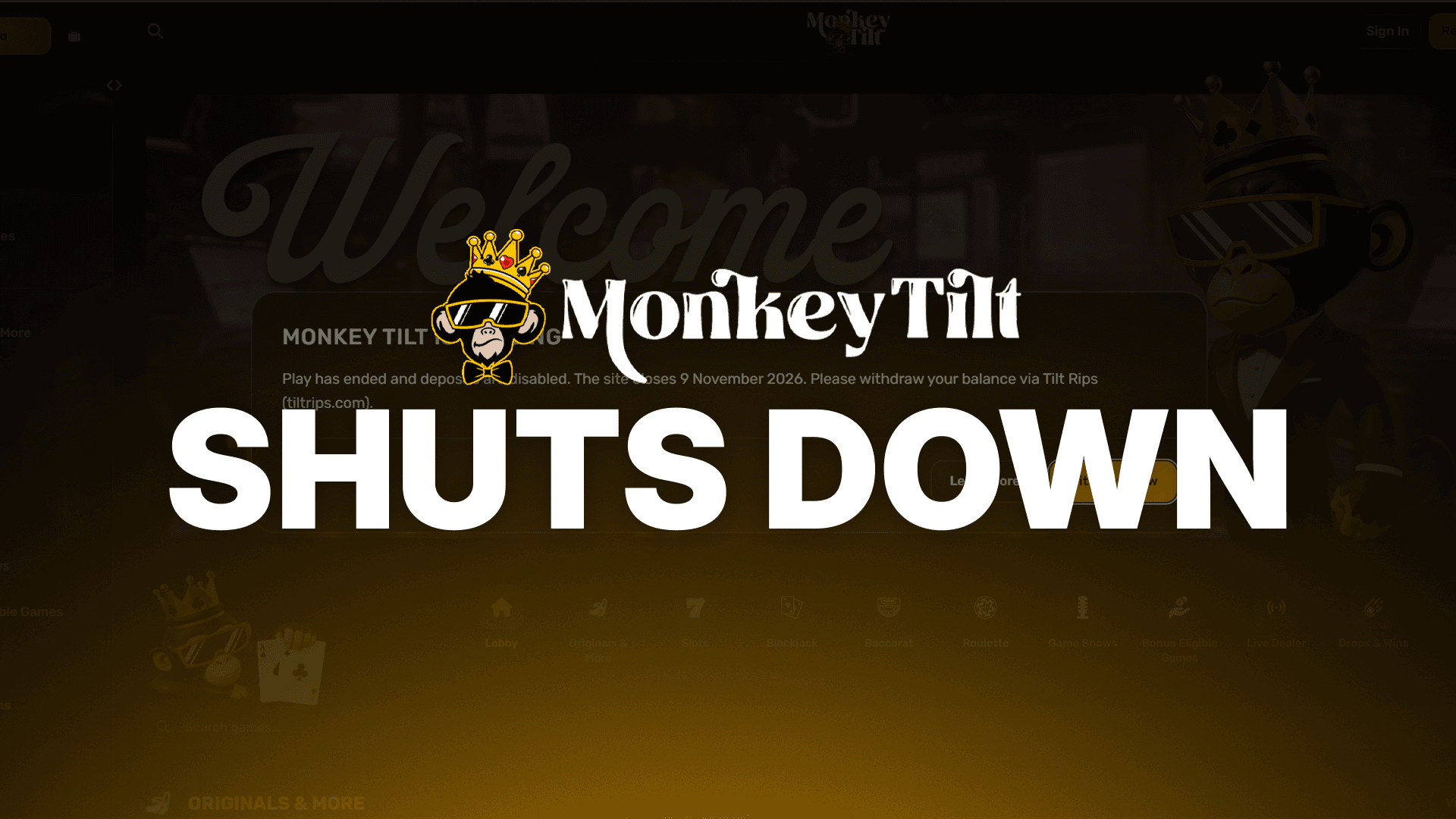
Crypto casino MonkeyTilt has announced it will shut down on November 9, 2026, ending its casino and sportsbook operations less than three years after the business was established.
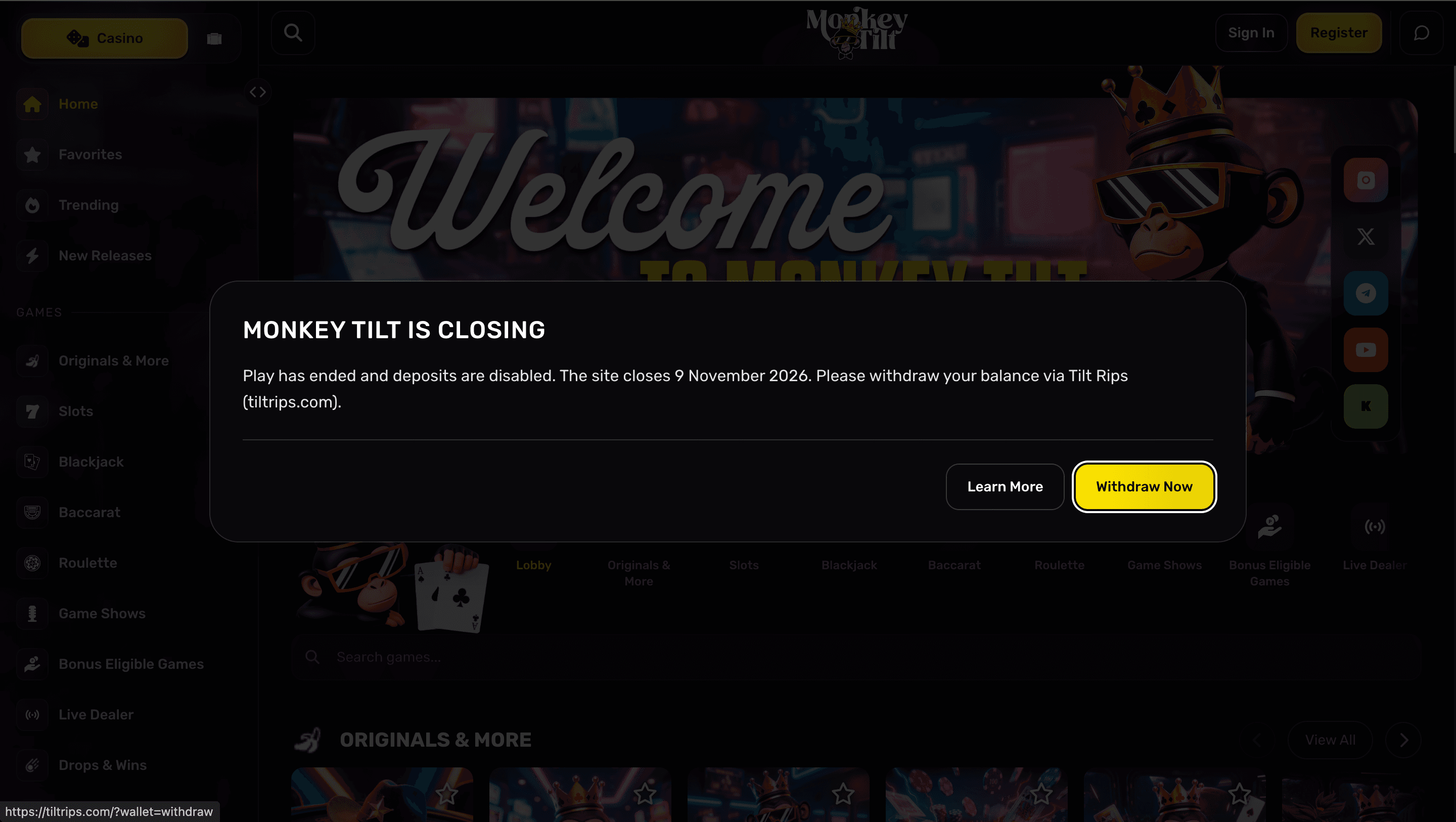
According to its official closure notice, gambling activity stopped on October 13. Deposits, registrations, promotions and bonuses have also been disabled. The company says its gambling licence is being surrendered.
Players can still access their accounts and withdraw remaining balances, including after November 9. Outstanding bonus balances will be converted into withdrawable cash, with withdrawals typically processed within 24 to 48 hours. MonkeyTilt directs customers to Tilt Rips for account access and withdrawals.
More Than $50 Million Raised to Challenge the Market
MonkeyTilt launched in March 2024 with ambitions to combine online gambling, cryptocurrency and entertainment. In November 2024 it announced a $30 million Series A led by Pantera Capital, following approximately $21 million in seed funding. Investors included Polychain Capital, PokerGO, Hack VC, Dream Ventures, Accomplice and Mirana Ventures. That puts publicly reported funding at approximately $51 million.
The company positioned itself around the social experience of gambling, bringing together casino games, sports betting, poker, VIP experiences and lifestyle branding. It reported reaching $200 million in monthly betting volume within eight months of launch.
A Liquidity Deal Five Months Before Closure
In May 2026, MonkeyTilt announced a liquidity partnership with iBankroll, a provider of bankroll financing and risk management for gambling operators. The arrangement was designed to absorb the short-term volatility of high-stakes wagers, allowing MonkeyTilt to offer $1 million-per-round blackjack, $6 million maximum slot wins and unlimited daily withdrawals without tying up the same amount of its own capital as reserves.
At the time, Kiki said the company had raised over $80 million from investors including Pantera Capital, Polychain, PokerGO and himself. That exceeds the approximately $51 million identifiable in previously announced rounds; a full breakdown of the higher total has not been publicly established.
Kiki explained that the deal would release capital previously set aside to guarantee payouts, leaving more available for growth. The partnership was publicly presented as an expansion of MonkeyTilt's financial capacity, not as an emergency financing measure. Five months later, the casino stopped accepting bets. The timing raises questions about how its growth plans developed, but the agreement alone does not establish whether the company faced liquidity problems or why it closed.
Sam Kiki: From MGM and Caesars to MonkeyTilt
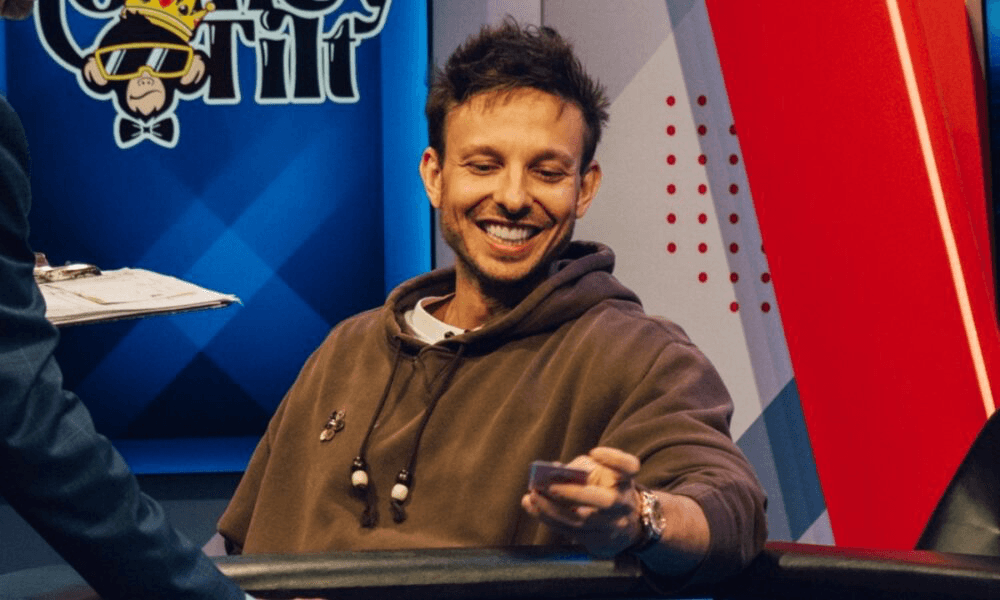
Founder Sam Kiki entered crypto gambling with a background few startup casino founders could match. Raised in Las Vegas, he studied neuroscience at Amherst College and worked in finance before joining MGM Resorts, where his responsibilities included sports betting, online gaming and investor relations.
He later joined Caesars Interactive as head of product and strategy, working on major industry partnerships and expansion initiatives. Outside his executive career, Kiki has also appeared as a high-stakes poker player on televised programs including High Stakes Poker.
His background was central to MonkeyTilt's pitch: a casino built by people with extensive experience in gambling and an understanding of its customers.
Why the Right Ingredients Weren't Enough
At surface level, MonkeyTilt had a well positioned entry into the market. It had a founder with senior-level traditional gaming experience, substantial venture backing and a differentiated approach to casino entertainment. But those advantages do not automatically translate into product-market fit.
Crypto casinos compete on more than the quality of their games. VIP relationships, rewards, withdrawals, distribution, brand recognition and the communities built around operators all influence where players choose to gamble. Those advantages take time to establish and can be difficult for a newcomer to buy.
MonkeyTilt's entertainment, lifestyle and poker positioning gave it an identity beyond the typical crypto casino. Yet the demographic attracted to gambling culture and social experiences may not be the same demographic that deposits and wagers regularly at a crypto casino.
That is the product-market-fit question at the center of MonkeyTilt's story. The company may have built a distinctive product and attracted significant activity without finding a sufficiently sustainable base of customers.
Kiki's Next Move: Tilt Rips
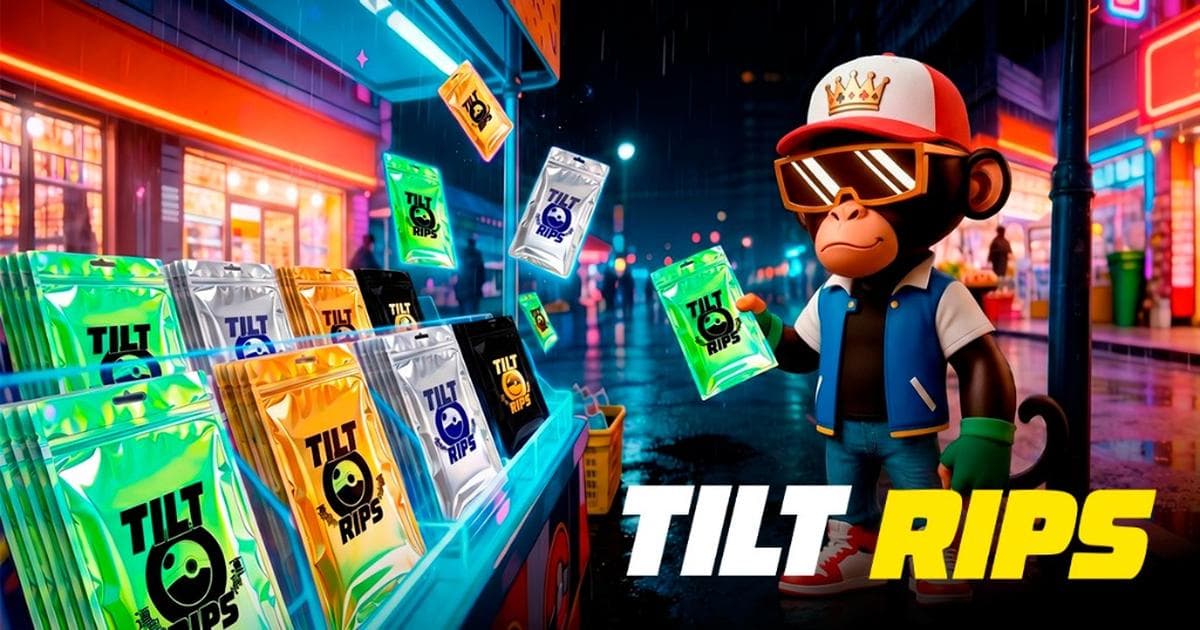
In May 2026, Kiki launched Tilt Rips, a digital pack-opening platform initially focused on Pokémon cards. Customers purchase and open digital packs backed by physical trading cards, then can keep cards in storage, list them on a marketplace, sell them back or request delivery. Its listed categories have expanded to One Piece and sports trading cards.
The product retains some mechanics familiar to gambling customers. A paid pack contains an uncertain selection of items, some potentially worth substantially more than the purchase price. But it is tied to physical collectibles and a collector audience rather than conventional casino wagering.
Tilt Rips launched before MonkeyTilt announced its closure, so it should not be characterized as a newly announced reaction to the shutdown. The closure notice now directs MonkeyTilt customers to the platform for withdrawals.
A Market That Doesn't Care About Funding or Experience
MonkeyTilt's closure does not erase its reported betting volume, fundraising success or Kiki's experience. But it’s a clear signal that a well-funded company led by experienced gambling executives will not alone make your platform a success in the highly competitive crypto casino market.
Traditional gaming experience brings knowledge of casino operations and customer behavior. Crypto-native gambling also demands distribution, player loyalty, community and product-market fit. MonkeyTilt had capital, industry connections and a recognizable strategy, but did not publicly demonstrate a sustainable position strong enough to keep its casino operating.
With the gambling business closing and Kiki continuing to build Tilt Rips, the story may ultimately be about finding a different market for the kind of experience the team wanted to create.