NewsPrediction Markets3 min read
Prediction Markets Gain NFL Betting Volume as Regulated Sportsbooks Stall
The American Gaming Association expects legal NFL wagering to remain nearly flat this season as prediction markets capture a growing share of sports-related trading activity.
 Written by Editorial Desk7 September 2026


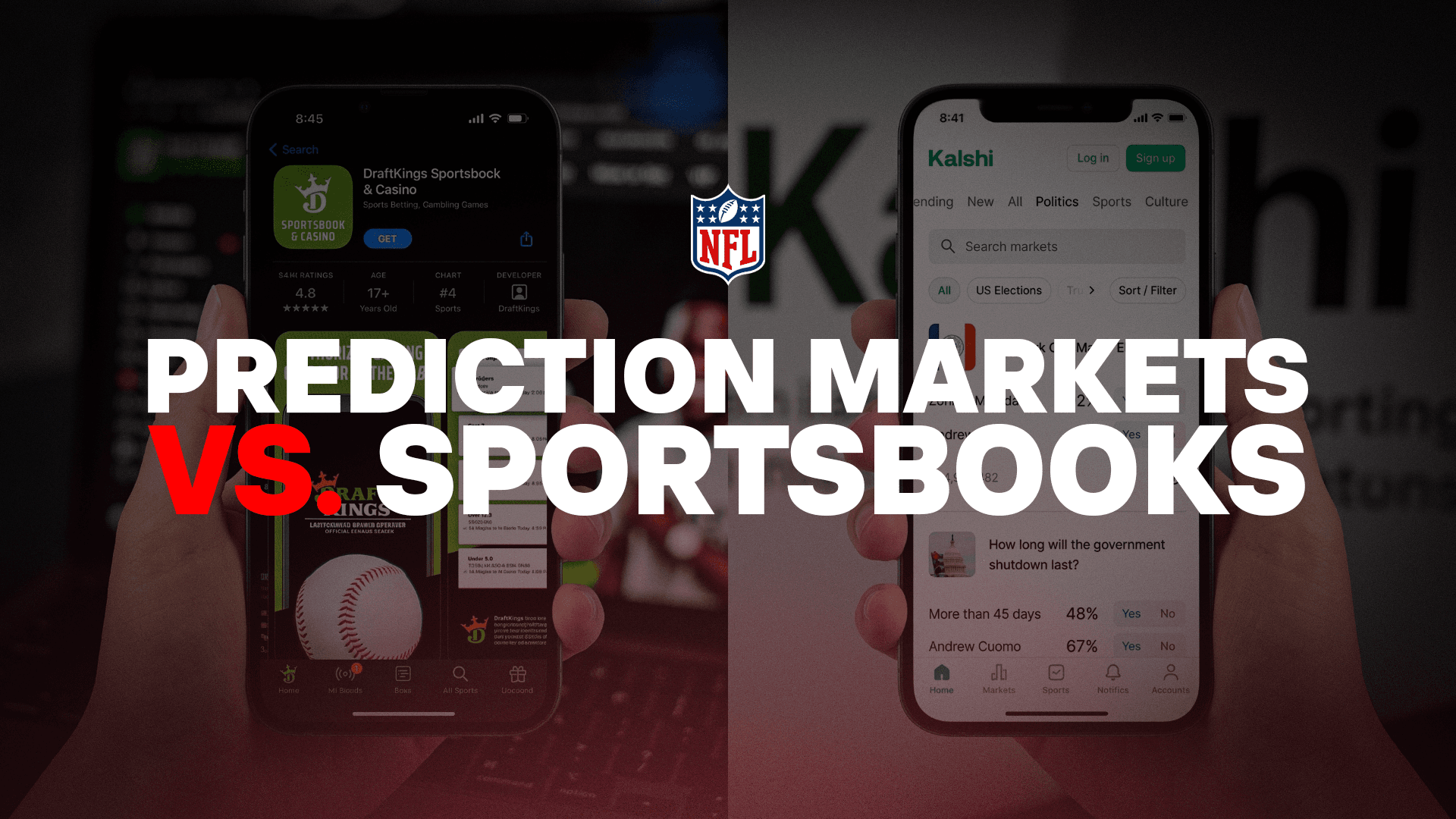
The American Gaming Association (AGA) is pointing to the rapid growth of prediction markets as legal US sports betting enters the 2026 NFL season with virtually no year-over-year handle growth.
Americans are expected to legally wager $29.5 billion through regulated commercial sportsbooks during the 2026 NFL season, according to the AGA, compared with approximately $29.4 billion last season. The estimate includes preseason betting, futures, the playoffs and Super Bowl LXI.
The near-flat projection marks a significant slowdown for a US sports betting market that has expanded rapidly since the Supreme Court overturned the federal sports betting ban in 2018.
AGA President and CEO Bill Miller attributed part of that slowdown to the emergence of sports event contracts on prediction markets.
“But this year is different,” Miller said. “Since the widespread launch of backdoor sports betting on so-called ‘prediction markets,’ the growth of legal handle has stalled.”
Prediction markets take a larger share of sports activity
Prediction markets have increasingly moved into territory traditionally occupied by sportsbooks, allowing users to trade contracts based on the outcomes of NFL games and other sporting events.
The AGA claims sports betting now accounts for roughly 80% of Kalshi’s volume and estimates that users aged 18 to 20 have generated approximately $5.1 billion in volume on the platform. That age group is below the minimum sports betting age in 35 of the 40 US jurisdictions where regulated wagering is legal.
The association also estimates that Kalshi, Polymarket and other prediction markets have diverted more than $1.3 billion in potential state gaming tax revenue since 2025.
Prediction markets operate under a different regulatory framework from traditional sportsbooks. Platforms such as Kalshi have argued that their event contracts fall under federal commodities regulation rather than individual state gambling laws, a distinction that has become the center of an expanding legal fight across the US.
The issue is increasingly reaching the courts. New Jersey recently asked the US Supreme Court to consider whether states have authority to regulate sports event contracts offered by Kalshi. The petition followed conflicting federal appeals court decisions over the extent of state authority in regulating the products.
Sports bettors are increasingly aware of prediction markets
Prediction markets are also becoming more familiar to existing sportsbook customers. Research from Optimove cited by NEXT.io surveyed 926 US NFL bettors and found 84% were aware of prediction markets, while 60% said they planned to trade, buy or sell event contracts during the year.
Their growing presence has also extended into advertising. Earlier this year, the AGA reported that prediction market operators accounted for 43% of digital sports betting ads seen by US consumers during the first two months of 2026. Kalshi had become the most visible sports betting brand by digital impressions over that period, according to Sensor Tower data compiled by the association.
The AGA has continued to push for sports event contracts to fall under the same state and tribal regulatory structures as sportsbooks, while prediction market operators maintain that federally regulated event contracts are distinct financial products.
With legal NFL sportsbook handle now projected to remain almost unchanged from last season, the competition between the two models is becoming increasingly visible in the numbers.