NewsPrediction Markets4 min read
CFTC Sues Louisiana to Block Court Order Halting Prediction Markets in the State
The CFTC and the Justice Department have sued Louisiana in federal court, a day after a state judge ordered more than 30 platforms, including Kalshi and Polymarket US, to stop serving Louisiana users.
 Written by Editorial Desk15 November 2026


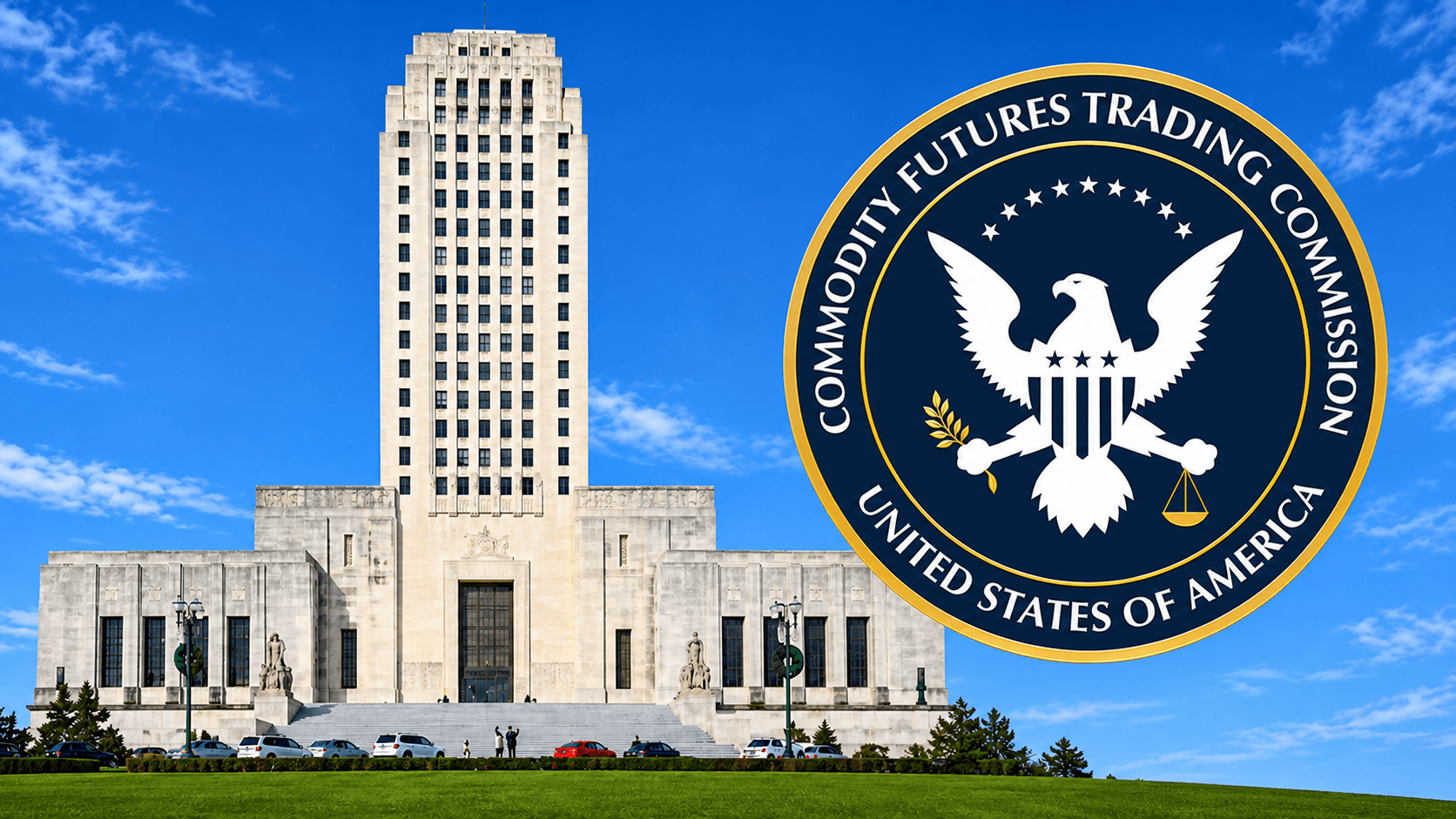
The Commodity Futures Trading Commission (CFTC) has sued Louisiana in federal court to stop the state from enforcing a temporary restraining order that tells CFTC-regulated prediction markets to stop operating there. The agency filed the case late on Friday, November 13, together with the Department of Justice.
The suit names Attorney General Liz Murrill as defendant and was filed in Louisiana's Eastern District, according to reports, which say it seeks declaratory and injunctive relief. The CFTC said it wants to stop Louisiana from barring event contracts offered by the exchanges, brokers and clearinghouses it registers: designated contract markets (DCMs), futures commission merchants and derivatives clearing organizations.
According to the agency, Louisiana is the 12th state it has sued over jurisdiction of derivatives markets. In our reading, the federal regulator is now in court on the platforms' side against an order that has already pushed at least one major operator out of the state.
Louisiana’s efforts to prevent CFTC-regulated Designated Contract Markets (DCMs) from offering CFTC-approved financial products intrude on the exclusive federal scheme Congress designed to oversee United States commodity derivatives markets
A parish judge acts without a hearing
Murrill sued Kalshi, Polymarket, Robinhood, Coinbase and other platforms in state court on November 12, according to reports. Her petition argues that the CFTC-regulated markets break Louisiana gaming law by offering online gambling and sports betting without a license.
The same day, Tangipahoa Parish Judge Jeffrey Johnson granted the restraining order. He found Murrill “entitled to her requested immediate relief” and wrote that the defendants' “illegal conduct is immediately and irreparably harming the State in its sovereign capacity, as well as its citizens.”
Reports say the order covers more than 30 companies and requires them to block Louisiana users. It names Polymarket US, not Polymarket's offshore site. The CFTC says the order was issued without notice to the defendants or a chance for them to be heard. Louisiana's computer gambling law carries fines of up to $100,000 and up to five years in prison, according to reports.
It’s not complicated: if you aren’t a licensed gaming operator, you aren’t legal. Illegal gambling is a crime and is subject to jail time and significant penalties. Judges all over the country have overwhelmingly called this activity what it is: gambling
Kalshi shuts off Louisiana users
Some of the named platforms could still be reached from Louisiana early on Friday, reports said. Kalshi told users in the state that day that “your government says you can’t use Kalshi anymore,” and reports say Kalshi and other platforms remain blocked while the courts decide.
Kalshi already had its own federal case against Louisiana officials, filed October 26. It withdrew a request for an emergency order on November 13, but a hearing set for November 23 still stands, according to reports.
Selig and Murrill trade accusations
In the agency's November 13 press release, CFTC Chairman Michael S. Selig said event contracts “have traded openly in Louisiana for years” and called the state's case “naked lawfare and a cynical political stunt.” He said the federal suit “seeks to maintain the status quo while the federal courts decide this issue in an orderly manner.”
Earlier in the week, Selig issued an advisory telling DCMs to keep their platforms open nationwide, after some markets geofenced states that had threatened legal action, according to reports.
Derivatives markets must operate on a uniform basis at a national scale in order to achieve the purposes set out in the Commodity Exchange Act. Geographic access restrictions are inconsistent with those purposes and the Act’s impartial access requirements
That leaves platforms holding two conflicting instructions. Their federal regulator says blocking states is inconsistent with the law, while a Louisiana court has ordered them to block Louisiana.
Murrill replied on X on November 14, attacking “Flatly false statements by the ‘obsequious standard bearer’ for prediction markets” and disputing that the markets had complied with the Commodity Exchange Act for years. “Gambling has been regulated by states for 250 years,” she wrote.
Two courts, two hearings
Louisiana is one of more than a dozen states suing to block prediction markets. The CFTC and the Justice Department sued Arkansas on November 12, which made it the 11th state the agency has sued, as Courthouse News reported.
Federal judges have blocked Arizona, Minnesota and Illinois in earlier cases, but states have won at least three cases in the past three months, according to reports. One was the Second Circuit's November 3 refusal to grant Kalshi injunctions in New York and Connecticut. New Jersey has asked the Supreme Court to review Kalshi's April 6 appeal win.
Kalshi's federal hearing is set for November 23, and the state court will hear Murrill's request for a preliminary injunction on November 30 at 9 a.m., according to reports. No judge had been assigned to the CFTC's case when it was filed, and no hearing date has been reported.