NewsCrypto Casinos4 min read
Sunderland Signs with Crypto Casino Shuffle as UK Weighs Sponsorship Ban
Shuffle will appear on Sunderland’s sleeves in a multi-year deal, as questions continue over whether non-UK-licensed operators should be allowed to sponsor English football clubs.
 Written by Editorial Desk14 September 2026


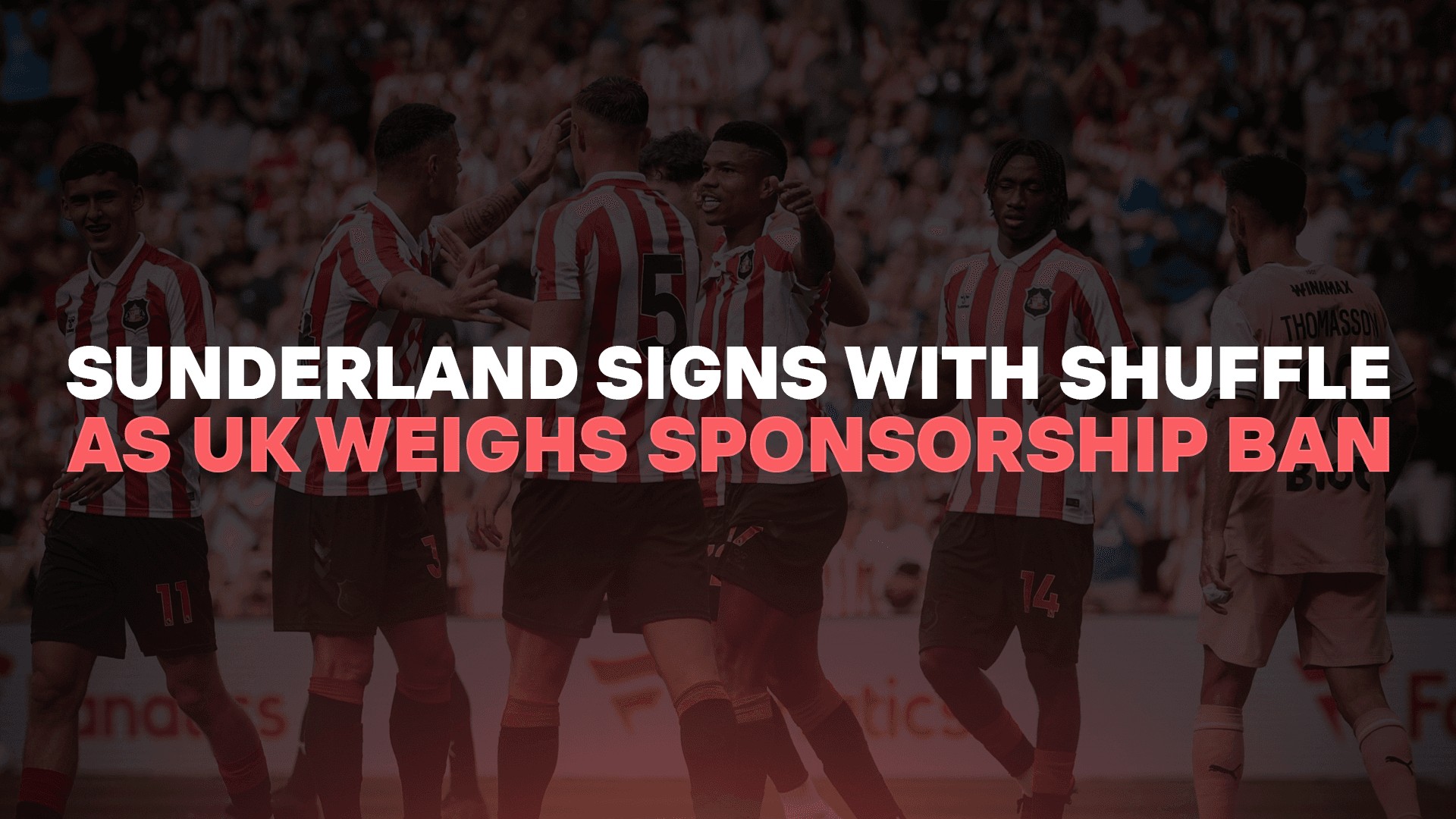
Sunderland AFC has named Shuffle as its new official sleeve partner, placing the crypto casino and sportsbook on the club’s first-team shirts through a multi-year agreement.
The partnership was announced on September 11. Shuffle’s branding will appear on Sunderland kits in the Premier League, FA Cup, Carabao Cup and UEFA Europa League, beginning with the club’s match against Arsenal.
The agreement extends beyond the logo on the sleeve. Sunderland and Shuffle plan to collaborate on digital content, fan activations and influencer-led campaigns designed to reach supporters outside Britain. Financial terms were not disclosed.
Sunderland presented the two brands as challengers with similar ambitions to grow internationally. The club said its return to European competition and increased global reach would give Shuffle a platform to build awareness, while Shuffle described the partnership as a long-term alignment with Sunderland and its supporters.
Shuffle is operated by Natural Nine B.V. and holds a Curaçao Gaming Control Board licence covering its online casino and sportsbook. It does not hold a remote gambling licence from the UK Gambling Commission and is not authorised to offer gambling to customers in Great Britain.
The sponsorship itself is permitted under the current framework. Overseas gambling companies can advertise through British sports partnerships if their services cannot be accessed by consumers in Great Britain. The operator is expected to block British customers, while the club is expected to carry out due diligence on how those restrictions are enforced.
Crypto Casinos Face Growing Scrutiny in Football
Sunderland’s deal is part of a broader movement of overseas gambling brands into Premier League sponsorship. Ten of the league’s 20 clubs now have a sponsorship or advertising relationship with a gambling company that is not licensed in Britain, according to an analysis published before the Shuffle announcement. That is double the number reported the previous summer.
Crypto casinos have become particularly active in this space. Their products are built for international users, their customers can deposit with digital assets and their marketing is often said to be aimed at markets outside the country where the sponsored club plays. A Premier League partnership gives those operators a global broadcast audience without requiring them to enter the British regulated gambling market.
These sponsorships have also been the source of criticism. The logo may be aimed at viewers abroad, but it is still displayed on shirts worn in British stadiums, sold to supporters and shown across domestic broadcasts. Critics and fans argue that the visibility of a football club can give an unfamiliar operator credibility even when local fans cannot use the product or rely on British consumer protections.
Crypto casinos attract scrutiny from two directions at once. They are gambling companies in a sport already saturated with betting promotion, and they are cryptocurrency businesses operating in a sector associated with additional financial and regulatory risk. The concern is not that every crypto casino operates in the same way, but that a club partnership can blur the distinction between brand recognition and regulatory approval.
Public opinion around both sponsor categories is already negative. A YouGov survey of 1,000 football fans in Great Britain found that 77% considered gambling companies inappropriate sponsors for football teams. Sixty percent said the same about cryptocurrency companies, while only 19% viewed crypto brands as appropriate partners. The survey also found that 42% supported removing gambling sponsors from shirt sleeves.
The Premier League has already responded to some of that pressure by withdrawing gambling brands from the front of matchday shirts from the 2026/27 season. The voluntary measure does not cover sleeves, training wear, stadium advertising or wider commercial partnerships. Sunderland can therefore remove a betting company from the front of its shirt while placing another gambling brand on the sleeve without breaching the league agreement.
Government policy may close the larger gap around “unlicensed” operators. A Department for Culture, Media and Sport consultation has proposed banning clubs, leagues and other businesses from entering sponsorship or advertising agreements with gambling providers that do not hold a Gambling Commission licence.
The consultation closed on September 9, two days before Sunderland announced Shuffle. The government has not published its final response or confirmed when a ban would take effect. Under the proposal, continuing to advertise an unlicensed gambling provider after the rules begin could become a criminal offence.
Clubs argue that international sponsorship revenue supports their ability to compete and that overseas operators can lawfully market to audiences in jurisdictions where they accept customers. Critics counter that football teams are lending their badges, players and supporter relationships to companies outside the domestic regulatory system.
The Shuffle agreement places Sunderland directly inside that debate. It gives the club a new global partner and gives Shuffle exposure across English and European football, but it also shows why the move away from front-of-shirt gambling sponsors has not ended the issue. Crypto casinos are continuing to enter football through the remaining inventory, while pressure grows to decide whether those partnerships should be allowed at all.